
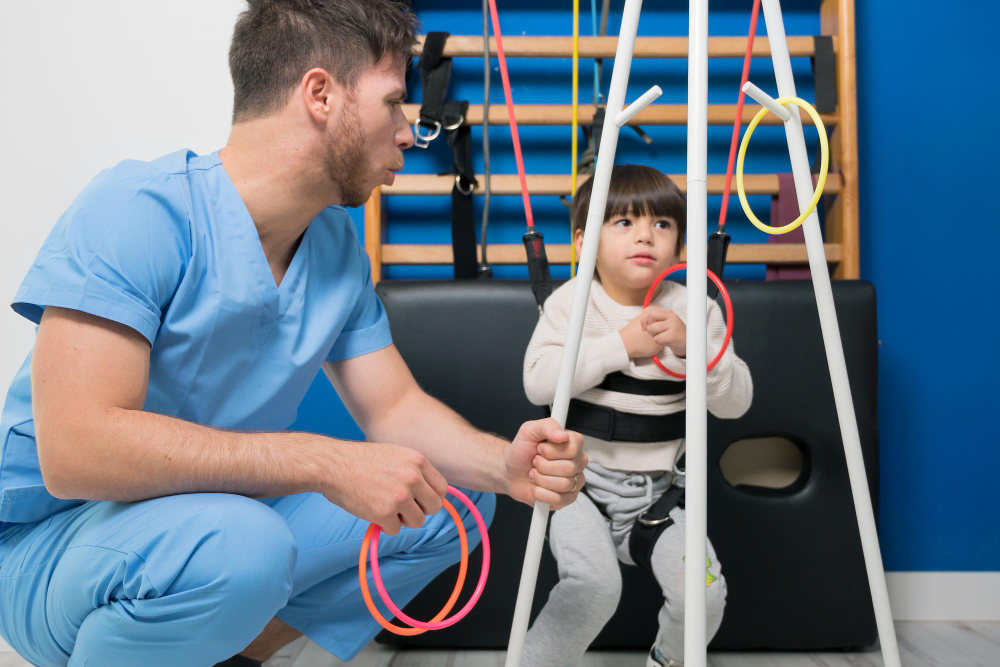
Cerebral palsy is a condition that affects movement and muscle control. Many children and adults with cerebral palsy face challenges with walking, balance, and daily activities. Physiotherapy for cerebral palsy plays a key role in helping people manage these challenges. In fact, physical therapy for cerebral palsy in children and adults can improve strength, flexibility, and independence. This blog explains the benefits of physiotherapy for cerebral palsy, common techniques, and what families can expect during therapy sessions.
What is Cerebral Palsy?
Cerebral palsy is a group of disorders that affect how a person moves and controls their muscles. Usually, it happens because of damage to the brain before, during, or soon after birth. As a result, people with cerebral palsy may have stiff muscles, weak muscles, or trouble with balance. Sometimes, speech and learning can also be affected. However, each person’s symptoms can be different.
Role of Physiotherapy in Cerebral Palsy
Physiotherapy is one of the main treatments for cerebral palsy. It helps people move better and do more things on their own. For example, physiotherapists use special exercises and activities to improve strength, balance, and flexibility. Because every person is unique, physiotherapy plans are made to fit each person’s needs. According to the World Health Organization (WHO), early and regular therapy can help children reach their full potential.
Common Physiotherapy Techniques for Cerebral Palsy
Physiotherapists use many evidence-based techniques to help people with cerebral palsy. Some of the most common methods include:
Because each person’s needs are different, the physiotherapist will choose the best techniques for them.
Benefits of Physiotherapy for Cerebral Palsy
Physiotherapy offers many benefits for people with cerebral palsy. For instance, regular therapy can:
According to the Centers for Disease Control and Prevention (CDC), early therapy can help children learn new skills and improve their quality of life.
What to Expect During Physiotherapy Sessions
During the first visit, the physiotherapist will assess the person’s movement, strength, and needs. Next, they will set clear goals, such as walking better or moving more easily. Each session may include:
Because therapy is a team effort, parents and caregivers are often involved. The physiotherapist will also teach exercises to do at home.
Tips for Parents and Caregivers
Supporting therapy at home can make a big difference. Here are some helpful tips:
Because every child is unique, it is important to follow the therapist’s guidance.
Prevention and Long-Term Management
While cerebral palsy cannot be cured, ongoing physiotherapy helps manage symptoms and prevent problems. Regular follow-up with the physiotherapist ensures the therapy plan stays up to date. Over time, therapy can help people with cerebral palsy stay active and healthy.
If you have questions about physiotherapy for cerebral palsy, consult a qualified physiotherapist for personalized advice and treatment options.